Engineering Honesty
Load charts list lifting capacity against boom length and radius in units your engineer can recalculate. Hydraulic flow and pilot pressure data ship with every crane and excavator serial.
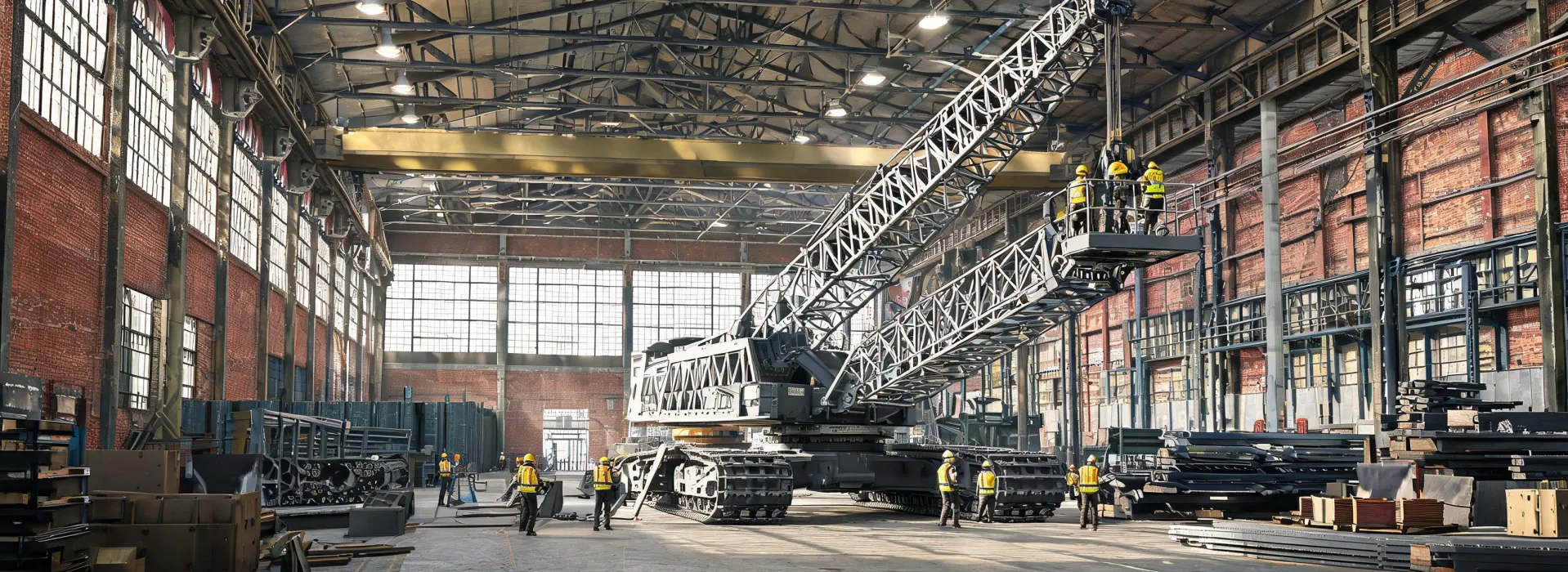
From 1874 chain-drive roots to today’s lattice boom and telescopic crane lines, Link-Belt builds lifting and excavation machines that contractors can verify on the load chart before the first pick.
Link-Belt began as a maker of chain and power-transmission components in 1874. From 1948 lattice-boom crawler cranes lifted power-plant turbines; from 1972 hydraulic excavators expanded digging depth and bucket capacity for quarry and foundation schedules. Today the Lexington campus covers 290,000 m² of production area and ships roughly 3,200 units per year to fleets in 85 countries.
Precision chain products establish the mechanical discipline that later shaped hoist and slew systems.
Early crawler cranes support power-plant and river infrastructure lifts with published radius charts.
Pin and bushing standards stabilize undercarriage life across mixed earthmoving fleets.
Dealer and parts hubs expand across Middle East quarry belts and Asian bridge corridors.
Crane and excavator lines meet EPA Tier 4 Final and CE Marking requirements for export projects.
Digital load-chart packs, ISO 9001 process control, and 8,000-hour rebuild programs become standard deliverables.
Load charts list lifting capacity against boom length and radius in units your engineer can recalculate. Hydraulic flow and pilot pressure data ship with every crane and excavator serial.
Major component overhauls target 8,000 hours. Slew-bearing torque audits and cylinder reseal warranties keep lattice boom and telescopic fleets productive through multi-year contracts.
Cab ergonomics, ROPS protection, and Tier 4 noise specifications recognize that hoist speed and digging cycles are only useful when the operator can finish the shift safely.
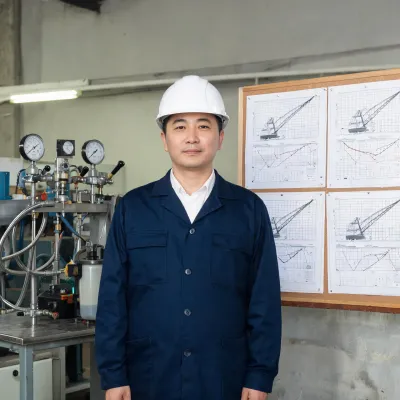
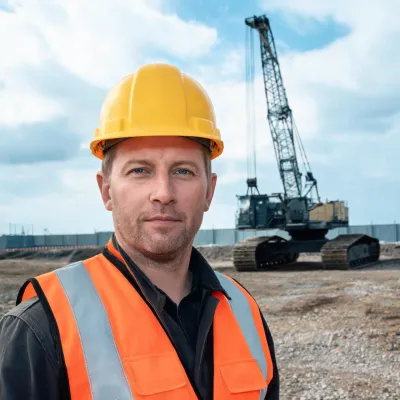
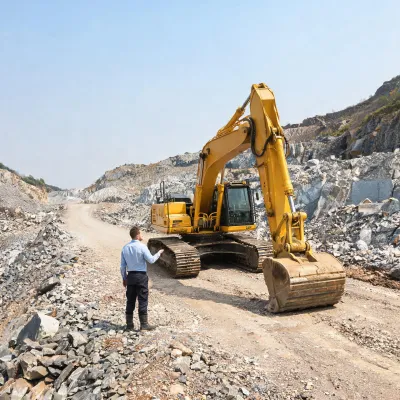
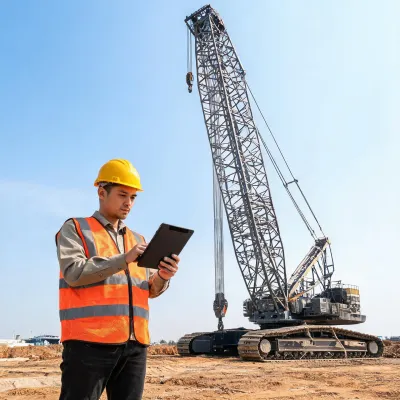
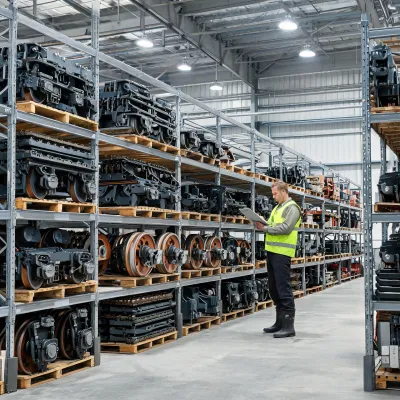
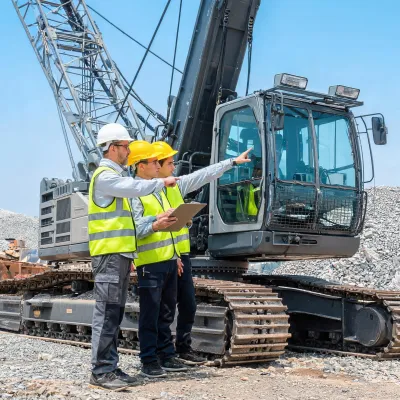
Quarry and bridge contractors can request a plant tour to walk hydraulic test benches, undercarriage lines, and crane assembly bays.
Request a Customer Tour